
The Science Behind Spacewalks and How Astronauts Survive Them

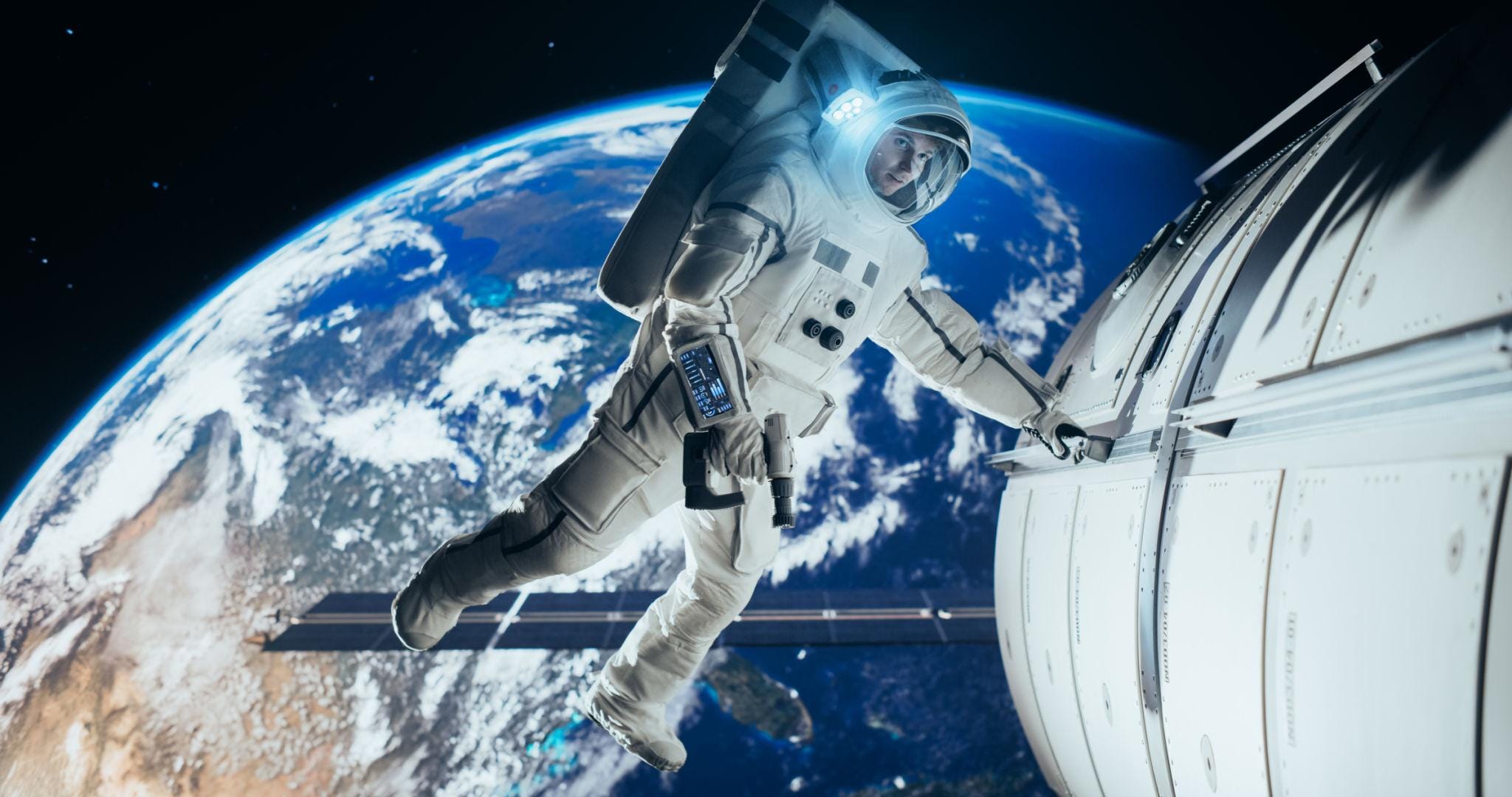
Spacewalks are among the most fascinating and dangerous activities humans perform in space. Floating hundreds of miles above Earth with nothing but a suit separating them from the harsh environment of space, astronauts carry out critical tasks that keep spacecraft and space stations operating.
But how do astronauts survive outside a spacecraft where there is no air, extreme temperatures, and intense radiation? The answer lies in an incredible combination of science, engineering, and human training.
What Is a Spacewalk?
A spacewalk, formally known as an Extravehicular Activity (EVA), occurs when an astronaut leaves the safety of a spacecraft to work in the vacuum of space.
Astronauts perform spacewalks for several reasons:
Repairing satellites or spacecraft
Installing new equipment
Conducting scientific experiments
Assembling structures like the International Space Station
Spacewalks have become a vital part of modern space exploration.
The first human spacewalk was performed by Alexei Leonov on March 18, 1965, during the Voskhod 2 mission. Leonov spent about 12 minutes floating outside his spacecraft, marking a historic milestone in space exploration.
The Harsh Environment of Space
Space is extremely hostile to human life. Without protection, a person exposed to space would face several deadly conditions.
1. No Oxygen
Space is a vacuum, meaning there is no air to breathe. Astronauts must carry their own oxygen supply.
2. Extreme Temperatures
Temperatures in space can swing drastically:
In direct sunlight: over 250°F (121°C)
In shade: below –250°F (–157°C)
3. Radiation
Without Earth’s atmosphere and magnetic field, astronauts are exposed to higher levels of cosmic radiation.
4. Microgravity
Astronauts float continuously, which means even small movements can send them drifting away.
To survive these conditions, astronauts rely on one of the most advanced pieces of equipment ever created.
The Spacesuit: A Personal Spacecraft
During a spacewalk, an astronaut’s suit essentially becomes a miniature spacecraft.
Modern astronauts from NASA use the Extravehicular Mobility Unit (EMU), a highly sophisticated suit designed to protect them in space.
A spacesuit performs several critical functions:
Oxygen Supply
The suit provides breathable oxygen and removes carbon dioxide.
Temperature Control
A special cooling garment inside the suit circulates water to regulate body temperature.
Pressure Maintenance
Space has no atmospheric pressure. The suit maintains internal pressure so the astronaut’s body can function normally.
Protection from Micrometeoroids
The suit’s multiple layers protect astronauts from tiny space particles traveling at extremely high speeds.
Communication
Built-in radios allow astronauts to stay in contact with mission control and other crew members.
How Astronauts Stay Attached to Spacecraft
One of the biggest dangers during a spacewalk is drifting away into space.
To prevent this, astronauts use safety tethers, strong cables that keep them connected to their spacecraft or space station.
Some astronauts also use a small propulsion device called the SAFER (Simplified Aid for EVA Rescue). This backpack contains tiny thrusters that allow astronauts to maneuver back to safety if they become untethered.
Training for Spacewalks
Before performing a spacewalk, astronauts undergo extensive training on Earth.
One of the main training environments is NASA’s Neutral Buoyancy Laboratory, a massive pool where astronauts practice working underwater while wearing spacesuits. The underwater environment simulates the feeling of microgravity.
Astronauts spend hundreds of hours training before ever attempting a real spacewalk.
They practice:
Using specialized tools
Moving along spacecraft handrails
Handling emergencies
Performing complex repairs
This preparation ensures astronauts can work efficiently and safely during missions.
Why Spacewalks Are Important
Spacewalks allow astronauts to do things that robots cannot easily accomplish.
They are essential for:
Repairing satellites like the Hubble Space Telescope
Building and maintaining the International Space Station
Testing equipment for future space missions
Without spacewalks, many of the technologies we rely on today—from communications satellites to space research—would not be possible.
The Future of Spacewalks
As humanity prepares for deeper space exploration, spacewalk technology continues to evolve.
New spacesuits are being developed for missions to the Moon and Mars. These suits must handle harsher environments, different gravity levels, and longer missions.
Programs like Artemis Program aim to return astronauts to the Moon, where spacewalks will play a critical role in building lunar bases and conducting scientific research.
Conclusion
Spacewalks represent one of the most extraordinary achievements in human exploration. By combining advanced engineering, scientific knowledge, and rigorous training, astronauts can safely step outside their spacecraft and work in one of the most dangerous environments imaginable.
From the first historic spacewalk by Alexei Leonov to the complex missions conducted today, spacewalks continue to push the boundaries of what humans can accomplish beyond Earth.
And as we look toward the Moon, Mars, and beyond, these incredible journeys outside the spacecraft will remain essential to humanity’s future in space.